Canada US moving tariffs 2026: What they mean for household goods
Key Takeaways
Canada–US household moves involve both transportation planning and customs review. Tariff treatment depends on the goods, their origin, their ownership history, and the traveller’s circumstances.
- Used personal belongings may qualify for duty-free treatment, but eligibility is not automatic.
- New purchases, gifts, commercial goods, and restricted items need closer review.
- Detailed inventories and supporting documents can reduce border questions.
- Tariff policy can change, so requirements should be checked before packing.
- A cross-border quote should account for weight, mileage, customs coordination, and possible delays.
Understanding Canada–US moving tariffs in 2026
The phrase Canada US moving tariffs 2026 household goods can sound as though every Canadian household shipment will receive the same charge. That is not how customs treatment generally works. A move from Canada to the United States is assessed according to the goods being imported and the circumstances of the person moving them. Rules can also change quickly, so information confirmed when the estimate is prepared should be checked again before departure.
What tariffs are and how they apply to imported goods
A tariff is a government charge applied to certain imported goods. It is different from the price of transporting a sofa, loading a truck, or preparing an inventory. Customs officials may consider the type of item, its country of origin, its value, and whether it is a personal effect or a commercial import.
In July 2026, the United States announced additional measures covering certain Canadian goods under Section 338, with the stated measures scheduled to take effect 30 days after signing. The published scope includes categories such as wine, hockey sticks, and cement, while also identifying exclusions and other tariff programs. That announcement does not by itself mean that ordinary used household belongings are subject to the same treatment.
Why household moves differ from commercial shipments
A household move normally contains belongings that a person already owns and uses, rather than goods imported for resale. Customs may still require a careful declaration, but the purpose and history of the shipment matter. The distinction is one reason a residential move should not be planned like a truckload of merchandise.
Personal effects can include furniture, clothing, appliances, and electronics, while newly purchased goods may invite different questions. A clear inventory helps show what is being moved, how it was acquired, and whether any item belongs in a separate customs category.
Which policy changes can affect a residential move
Trade measures can be written around products, materials, countries of origin, or specific tariff classifications. A policy aimed at Canadian exports may therefore affect a particular item without applying to every object loaded in a Canadian home. Separate rules may also apply to food, plants, weapons, vehicles, and hazardous materials.
The practical effect for a household is often indirect. A policy change may alter the treatment of a particular item, prompt additional questions at the border, or affect equipment and operating costs used to move the shipment. The shipment still needs to be reviewed item by item.
Why tariff rules and exemptions must be verified before moving
Duty-free treatment is usually tied to specific conditions rather than a blanket promise for all household goods. Residency, immigration status, prior ownership, use, destination, and the timing of arrival can all matter. The Canada–US customs guide is a useful starting point for understanding why personal effects and commercial goods are treated differently.
For a current move, use official customs guidance and ask the moving company what information its coordinator needs. Verify the rule before packing rather than relying on an old move, a friend’s experience, or a general statement about USMCA treatment. A mover can help organize shipment information, but immigration and customs authorities make the final decisions.
How tariffs may affect Canadian household moves to the US
Most Canadian households are not importing goods for sale when they move to the United States. That can support a different customs analysis from a commercial shipment, but it does not remove the need to declare everything accurately. The safest approach is to separate used personal effects from newer, unusual, or regulated items before the inventory is finalized.

When personal belongings may qualify for duty-free treatment
Used belongings that have been owned and used by the person moving may qualify for duty-free treatment when the applicable conditions are met. Qualification can depend on the person’s status in the United States and the details of the import, so it should not be assumed from the fact that the goods are packed in a moving truck.
Furniture, clothing, household appliances, and ordinary personal effects are often easier to explain when the inventory identifies them clearly. A description such as “used dining table” is more useful than a vague entry such as “boxes.”
How newly purchased or commercial goods can be treated differently
New purchases may not have the same ownership and use history as established household belongings. Receipts, purchase dates, values, and intended use can help customs officials understand what is entering the country. Goods bought for resale or business distribution may be treated as commercial imports rather than personal effects.
Gifts also deserve attention. Their presence in a household does not automatically make them used personal belongings, particularly when they are new, boxed, or present in quantity. Flag these items for review rather than blending them into the general inventory.
Why country of origin matters for household items
Country of origin describes where an item was made, not necessarily where it was purchased or where it was last used. A Canadian resident may own furniture manufactured elsewhere, and an item bought in Canada may still have another country of origin. That information can matter when a tariff measure covers particular goods.
Most households will not know the origin of every older possession. Record the information when it is available, especially for newer products, appliances, electronics, and high-value goods. When the origin is unclear, describe the item honestly and ask whether additional information is needed.
How tariffs could affect transportation, equipment, and service costs
A tariff assessed on an imported item is separate from the moving company’s transportation charge. Even so, changing trade measures can influence the wider cost environment, including equipment, routing, fuel-related operations, administrative work, or time spent addressing a customs question. Those effects are not the same as a duty on the contents of a household shipment.
For Canadian customers moving to the US, request a cross-border quote with enough detail for the estimate to reflect the shipment’s size and circumstances. Ask which charges are transportation, which are documentation or coordination services, and which amounts—if any—would be determined by customs.
Household goods to review before a cross-border move
A room-by-room review is more useful than trying to remember everything on moving day. Canadian households should identify ordinary goods, unusual goods, and items that cannot be loaded together with household belongings. This review also provides an opportunity to donate or dispose of things that would create extra paperwork or risk.
Furniture, appliances, electronics, and personal effects
Furniture, clothing, kitchenware, books, computers, televisions, and ordinary personal effects should be described in a way that lets a reviewer understand the shipment. Include quantities where practical and distinguish between used belongings and recently purchased items. Serial numbers or model details may be sensible for valuable electronics and appliances.
Do not assume that a moving company’s packing list replaces a customs inventory. The customs document needs descriptions that support the import declaration, while the mover also needs enough detail to plan labour, protection, and loading space.
Items that may require receipts or additional details
Receipts are especially helpful for new purchases, gifts, jewellery, artwork, electronics, and other high-value belongings. They can support the declared value and clarify whether an item was purchased recently or owned for years. If a receipt is unavailable, make a reasonable record of the item’s description, approximate value, and ownership history.
A compact review can focus on four groups:
- Items purchased shortly before the move.
- Gifts that are new or still packaged.
- High-value goods such as jewellery, artwork, and specialty electronics.
- Items with food, plant, animal, fuel, or weapon-related components.
After this review, keep the supporting records with the travel and customs documents, not inside a box on the truck. That small step can make a question easier to answer while the shipment is being processed.
Goods that could be restricted, taxed, or delayed
Food, plants, animal products, weapons, vehicles, and goods containing regulated materials can require separate rules or permits. An item that is legal to own in Canada may still need review before entering the United States. Customs questions can also arise when an item is poorly described or appears inconsistent with the rest of the shipment.
The Canada to US moving truck rules guide can help households build an early screening list. Check special items well before loading, since removing an item at the last minute may be more difficult than leaving it behind during the original packing plan.
Prohibited moving-truck items such as fuel, paint, batteries, and ammunition
Certain goods should not be loaded on a moving truck because they can create safety, transport, or regulatory problems. The prohibited-item list includes perishable foods, fuel, paint, ammunition, liquids, batteries, propane tanks, aerosol cans, gas cans unless purged, matches, oil, and pets. These items need a separate plan, disposal arrangement, or appropriate transport advice.
Do the final prohibited-item check before the crew arrives. A box marked “garage” is not enough when it contains paint, oil, fuel, or batteries. Removing those goods early protects the shipment and avoids a preventable interruption at pickup.
Documents needed for a Canada–US household move
Documents serve two purposes: they establish who is moving, and they explain what is being imported. Keep originals and working copies organized, with the documents needed at the border accessible rather than buried in the shipment. The precise forms depend on the move, the traveller’s status, and the goods included.

Inventory lists and proof of ownership
Prepare a detailed inventory before the truck is sealed. List furniture, appliances, electronics, clothing, and personal effects with practical descriptions, and separate goods travelling with you from goods arriving later where the customs process requires that distinction.
Proof of ownership is most useful for newer or expensive items. A well-organized inventory also helps identify restricted goods before pickup and gives the moving team a clearer basis for estimating shipment volume.
Passports, visas, and immigration documents
Passports and relevant visas, work permits, admission records, or other immigration documents should be kept with the traveller. Customs clearance for household goods and permission to enter the United States are related parts of the move, but they are not the same decision. A moving company can coordinate logistics and customs information without providing immigration advice.
If the admission category or timing changes, revisit the household-goods plan. The Canada–US move planning guide explains why immigration status, destination requirements, customs, and shipment preparation need to be coordinated rather than handled as separate afterthoughts.
Customs declarations and shipment details
Depending on the circumstances, the shipment may require a customs declaration such as CBP Form 3299 for unaccompanied household articles. The form and supporting documents should be completed using the official instructions and the actual contents of the shipment. Make sure the importer’s identity, inventory, address, and travel details are consistent across the paperwork.
Give the moving company accurate pickup and delivery information, including whether goods will arrive later and whether a vehicle, pet, or special item is travelling separately. Consistency matters more than elaborate wording.
Records for new purchases, gifts, and high-value items
Keep receipts and valuation records together for goods that may need more explanation. New purchases and gifts should be clearly marked in the inventory, while high-value items may need additional descriptions or evidence of ownership. Do not understate values simply to make the paperwork look simpler.
When the paperwork is prepared early, there is time to ask a customs broker or the relevant authority about an uncertain item. That is far less stressful than discovering the question when the truck is already at the border.
How customs processing works from estimate to delivery
Customs processing begins before the truck reaches the border. The shipment must be described, the traveller’s documents assembled, and any unusual goods identified. A Canada–US move therefore needs communication between the household, the moving company, and the people responsible for customs clearance.
Preparing the shipment and inventory in Canada
Start with a home review and an honest inventory. Separate prohibited goods, identify new purchases, gather receipts, and decide which essential documents will travel with you. The estimate can then reflect the shipment more accurately, while the inventory gives customs a coherent explanation of the load.
Packing should not hide important distinctions. Keep a record of carton contents and avoid combining regulated items with ordinary household goods. If something changes after the inventory is prepared, update the paperwork rather than hoping the difference will go unnoticed.
Coordinating border paperwork with the moving company
Provide the moving company with the documents and details it requests by the agreed deadline. Coordination may include checking shipment descriptions, confirming pickup and delivery locations, reviewing special items, and making sure the driver or customs contact has the information needed for the crossing.
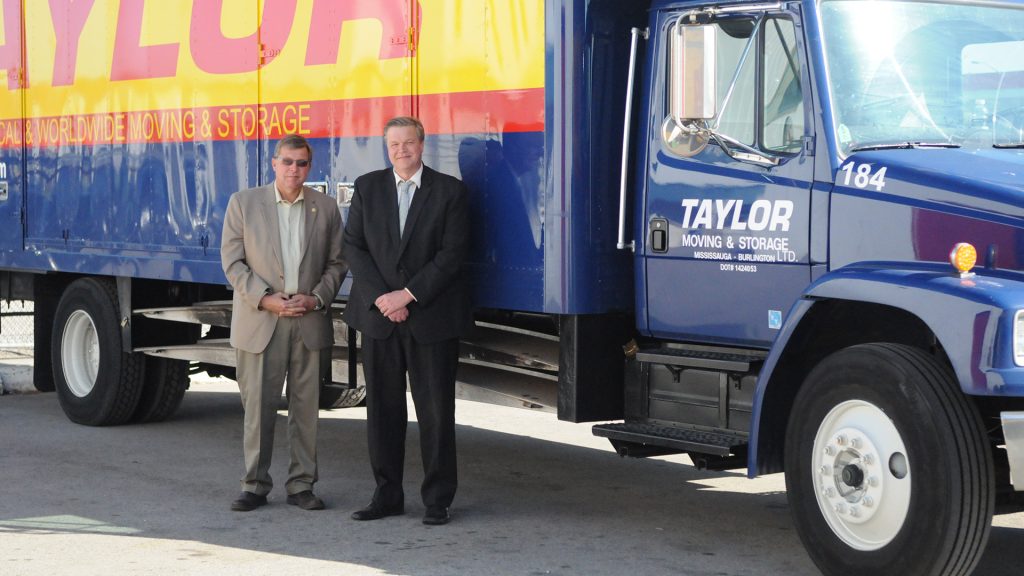
Taylor Moving and Storage provides cross-border planning help and customs-aware coordination as part of its Canada–US moving process. That support is about organizing the move and its information; it does not replace the authority of US Customs and Border Protection.
What can happen during customs review
A customs review may be routine, or officials may ask for clarification about an item, value, origin, ownership, or immigration status. The shipment could be released, referred for additional examination, or held until missing information is supplied. The outcome depends on the authorities and the individual shipment.
A calm, consistent inventory is the best preparation. If the paperwork and the physical contents tell the same story, questions are generally easier to answer than when descriptions are vague or contradictory.
Managing delays when documentation is incomplete
Incomplete paperwork can lead to extra communication, storage needs, rescheduling, or a longer period before delivery. Build some flexibility into housing and travel arrangements, particularly when the shipment includes goods that need special review. Avoid promising yourself that a particular border date is guaranteed.
If a document is missing, tell the moving coordinator promptly. Early notice gives the parties more time to identify the gap and decide whether the document can be obtained, corrected, or submitted through the appropriate process.
How tariffs and border requirements can influence moving quotes
A cross-border quote reflects more than the distance between two addresses. Shipment weight, mileage, route, access, packing, storage, customs coordination, and timing can all influence the price. Tariffs or duties, when applicable, should be discussed separately from the mover’s service charges so the estimate is not misunderstood.
Weight, mileage, routing, and shipment volume
For long-distance and cross-border moves, moving costs are calculated using mileage travelled and shipment weight. A larger shipment can require more truck space, labour, and handling, while a longer Canadian origin route can add transportation cost. Access conditions at either home may also affect the work required.
A detailed survey or well-prepared inventory gives the estimator better information. Decluttering before the survey can reduce the goods being transported, but it should not mean omitting items that will ultimately be loaded.
Customs coordination and additional administrative services
Customs-aware coordination can involve reviewing documents, sharing shipment details, and communicating about unusual goods or changing plans. Ask whether these activities are included in the quote or listed as separate services. Also ask which customs charges are outside the mover’s control.
A clear quote should identify assumptions. For example, it may state whether packing, storage, vehicle transport, special crating, or delivery conditions are included. That clarity is valuable even when no tariff applies to the household goods.
Storage, inspection, and border-delay considerations
If customs asks for additional information or conducts an inspection, the shipment may not proceed on the original schedule. Storage, rehandling, waiting time, or a second delivery arrangement can then become relevant. These possibilities should be discussed before the move, without treating them as inevitable.
The practical question is not simply whether a quote includes “customs.” Ask what happens if the shipment is delayed, who communicates updates, and how any third-party charges are handled. Written answers make estimates easier to compare.
Comparing binding, non-binding, and not-to-exceed estimates
A binding estimate is a fixed price under the agreed conditions. A non-binding estimate can change according to the actual services and shipment details. A not-to-exceed estimate sets a ceiling under its stated terms, while the final price may be lower if the move is completed more efficiently.
Taylor offers binding, non-binding, and not-to-exceed quoting options. Compare the assumptions behind each one, not just the first number on the page. The cheapest-looking estimate may leave more uncertainty around weight, access, storage, or border-related work.
| Quote type | What it generally means | What to confirm |
|---|---|---|
| Binding | A fixed price under agreed conditions | Which services and shipment details are covered |
| Non-binding | The price can change with actual move conditions | How changes are calculated and communicated |
| Not-to-exceed | The price will not exceed the stated ceiling under its terms | The ceiling, exclusions, and circumstances that may change it |
The names alone are not enough. Read the conditions, identify exclusions, and ask how customs-related delays or third-party charges are treated before selecting an estimate.
Planning a Canada–US move under changing 2026 rules
Policy uncertainty is a reason to plan earlier, not a reason to postpone every decision. A Canadian household can reduce confusion by separating immigration questions, customs questions, and moving logistics while keeping them coordinated. The goal is a complete and current file before pickup day.
How far in advance to request a cross-border estimate
Request an estimate as soon as the destination and approximate timing are known. Taylor’s general guidance is to schedule at least three weeks in advance, although moves can be booked from three days to one year ahead depending on availability and circumstances. Cross-border households should allow additional time for inventory preparation and document review.
Early planning is especially useful during busy seasons or when the move includes storage, a vehicle, pets, high-value goods, or a complicated immigration timeline. It also leaves room to revise the shipment after decluttering.
Questions to ask a Canada–US moving company
Ask how the company handles the Canadian pickup, border coordination, delivery, inventory changes, and communication during a delay. Confirm the service area, insurance terms, packing options, storage arrangements, and the quote format. You should also ask which customs questions the mover can support and which must be directed to government authorities.
A useful conversation should leave you with a sequence of next steps rather than a single price. If the answers are vague, request them in writing before committing to the move.
How to reduce avoidable costs without choosing poor service
The most reliable savings usually come from better preparation, not from removing necessary coordination. Declutter, provide an accurate inventory, gather receipts early, and avoid last-minute changes. Ask about flexible service options instead of automatically choosing the least expensive quote.
Packing only what you intend to keep can reduce weight and volume. At the same time, underreporting goods or selecting a quote that excludes essential work can create larger costs later through rehandling, delays, or revised charges.
Why experienced coordination matters for customs-aware delivery
A cross-border household move combines a Canadian origin, a US destination, transportation, customs information, and a personal immigration situation. Experienced coordination helps keep those moving parts connected from estimate through delivery. It cannot guarantee a customs outcome, but it can make responsibilities, documents, and updates easier to manage.
For a household moving from any point in Canada to anywhere in the United States, the best plan is specific to the people, goods, route, and timing involved. Review the rules close to departure and keep the final inventory aligned with what is actually loaded.
Conclusion
Canada–US tariff changes do not automatically turn every household belonging into a dutiable import, but they do make careful classification and current documentation more valuable. Canadian households can prepare by separating used personal effects from new or restricted goods, keeping immigration records accessible, and comparing quotes on both service and uncertainty. A well-coordinated plan gives customs officials clearer information and gives the household a more realistic path from pickup to delivery.
Frequently Asked Questions
Are all household goods from Canada subject to US tariffs?
No. Tariff treatment depends on the item, its country of origin, its ownership and use, and the circumstances of the import. Used personal effects may qualify for duty-free treatment when the applicable conditions are met.
Can used furniture and clothing usually be moved as personal effects?
Used furniture and clothing are commonly included in household shipments, but they still need to be declared accurately. Eligibility for duty-free treatment depends on the person’s circumstances and the relevant customs rules.
Are new purchases treated differently from used belongings?
They can be. New purchases may require receipts, values, purchase dates, or additional explanation, particularly when they are still packaged or present in quantity.
Why does the country of origin matter?
The country of origin is where an item was made, not necessarily where it was purchased or used. Certain tariff measures apply to particular goods or origins, so this information can affect customs review.
What documents should a Canadian moving to the US keep accessible?
Keep passports, visas or immigration documents, inventory lists, customs declarations, receipts for newer or valuable goods, and relevant vehicle or special-item records accessible during travel and border processing.
What happens if customs paperwork is incomplete?
Customs may request clarification, inspect the shipment, or hold it until the missing information is provided. This can affect delivery timing and may create storage, waiting, or rehandling costs.
Can a moving company guarantee that no duties will apply?
No. A moving company can help organize the shipment and provide customs-related coordination, but customs authorities determine admissibility, tariff treatment, and any duties or taxes that apply.
Leave a Comment