Moving to Toronto from New York: What to know before your cross-border move

Key Takeaways
A move from New York to Toronto involves immigration, customs, transportation, and settling-in decisions—not only loading a truck. Use the following points to keep the process organized.
- Confirm your Canadian immigration or residency pathway before booking transportation.
- Build your budget around shipment weight, mileage, service level, storage, and possible customs-related charges.
- Prepare a detailed inventory and separate restricted or difficult-to-ship items early.
- Allow time for border coordination, inspections, building access, and delivery conditions.
- Compare movers by documentation practices, insurance, communication, and experience with residential US-to-Canada routes.
Start with immigration, residency, and move eligibility
Moving to Toronto from New York what to know begins with eligibility, not packing tape. Your right to enter and remain in Canada affects your timing, housing plans, work arrangements, and the movement of your household goods. Treat the legal side and the transportation side as connected planning tracks, but do not assume one replaces the other.
Confirm the immigration status that fits your situation
Start by identifying the Canadian status that matches your circumstances, such as work, study, family, or another immigration pathway. Requirements can differ substantially, and approval timelines may not match the date you would prefer to move. Confirm current rules with official Canadian sources or a qualified immigration professional before committing to a final schedule.
Separate moving logistics from immigration and legal advice
A moving company can discuss pickup, transport, inventory, delivery, and customs coordination, but it cannot decide whether you qualify to immigrate or provide legal advice. Keep written confirmation of your own immigration requirements and share only the logistics documents your mover needs. This separation prevents a transportation estimate from being mistaken for an immigration plan.
Prepare passports, permits, and supporting documents
Make a digital and paper file for passports, permits, employment or school records, identity documents, and any correspondence relevant to your entry. Keep copies accessible while travelling rather than inside the shipment. The broader New York-to-Toronto relocation guide can help you organize timing, budgeting, and settlement questions alongside your official document checks.
Check how your vehicle, pets, and household goods affect the move
Vehicles, pets, and household goods can each bring separate documentation or admissibility questions. Ask the relevant Canadian authorities about import rules, registration, health records, and declarations before your pickup date. Your mover should also know what cannot be loaded, including perishable foods, fuel, paint, ammunition, liquids, batteries, propane tanks, aerosol cans, matches, and oil.
Build a realistic New York-to-Toronto moving budget
A cross-border estimate is more than a line for transportation. Weight, mileage, packing, special handling, storage, and the timing of border-related work can all affect the final figure. Build a written budget early, then leave room for costs that depend on your belongings or circumstances.

Understand how cross-border moving costs are calculated
For long-distance and cross-border moves, costs are commonly quoted using mileage travelled and shipment weight, while service choices add another layer. A home with fewer belongings may need less transport capacity, but a fragile artwork, vehicle, or difficult access point can still require specialized planning. Request an estimate based on an honest inventory rather than a rough guess.
Account for shipment weight, mileage, and service levels
Packing, crating, vehicle transport, carrying distance, stairs, elevators, and delivery conditions can change the work involved. An accurate inventory matters because it gives the mover a clearer basis for estimating weight and services. Compare quotes using the same list and service assumptions so the lowest initial number does not hide omitted work.
| Cost factor | What to clarify | Why it matters |
|---|---|---|
| Shipment weight | How the estimate is measured | More goods generally require more capacity |
| Mileage | Which pickup and delivery points are included | Route distance affects transportation planning |
| Packing and crating | Which items receive professional protection | Fragile or valuable goods may need extra preparation |
| Storage | Whether short- or long-term holding is available | A possession date may not match delivery timing |
| Access and delivery | Stairs, elevators, parking, and carrying distance | Difficult access can change labour and scheduling |
After comparing the rows, ask each mover to explain assumptions in plain language. A quote is easier to evaluate when it shows what is included, what is optional, and what could change.
Plan for customs-related charges, taxes, and potential fees
Customs documentation and inspection requirements can affect timing and administration, while taxes or other charges may depend on your status and the goods involved. Do not assume every household item receives identical treatment. For decisions involving tax residency, duties, or immigration, consult the appropriate Canadian authority or adviser.
Compare a full-service move with packing and storage options
A full-service plan may include professional packing, loading, transportation, and delivery, while other plans let you pack some belongings yourself or use storage between homes. The right choice depends on your time, risk tolerance, access conditions, and available budget. Taylor’s quote request is a practical starting point for discussing the shipment and services you actually need.
Prepare your household goods for Canadian customs
Customs preparation is where a household move becomes a carefully documented international shipment. Every item does not need a lengthy explanation, but your inventory should be complete, consistent, and easy to review. Begin before packing so you have time to decide what travels, what stays, and what needs special research.
Create an accurate inventory of everything you are bringing
List furniture, boxes, appliances, electronics, tools, artwork, vehicles, and other personal effects with useful descriptions and approximate values. Number boxes and keep the numbering consistent with your inventory. Photographs can help you remember condition and contents, especially for high-value or fragile belongings.
Identify restricted, prohibited, and difficult-to-ship items
Some products are unsafe for a moving truck or require advance review, including fuel, liquids, batteries, ammunition, propane, aerosols, and perishable food. Pets are not loaded on the moving truck and require separate arrangements. Ask about plants, medications, firearms, alcohol, and unusually large equipment rather than placing them in a box without checking.
Organize ownership records for high-value belongings
Keep receipts, appraisals, serial numbers, and photographs for jewelry, art, instruments, collectibles, and specialty equipment. These records support your own insurance and declaration process, even when an item has been owned for years. Store them separately from the shipment so they remain available during transit and delivery.
Avoid delays caused by incomplete or inconsistent paperwork
A missing item, conflicting description, or unexplained valuation can create questions at the border. Review the inventory against the packed boxes and update it when plans change. The US-to-Canada customs guide offers another useful reminder to prepare documents and expectations before the shipment leaves New York.
Choose the right cross-border moving plan
The best plan reflects the shape of your move, not just the distance between two cities. Think through what needs protection, whether your homes overlap, and how much flexibility you have around pickup and delivery. A good plan also makes responsibilities visible before the first box is loaded.
Decide whether you need packing, crating, or vehicle transport
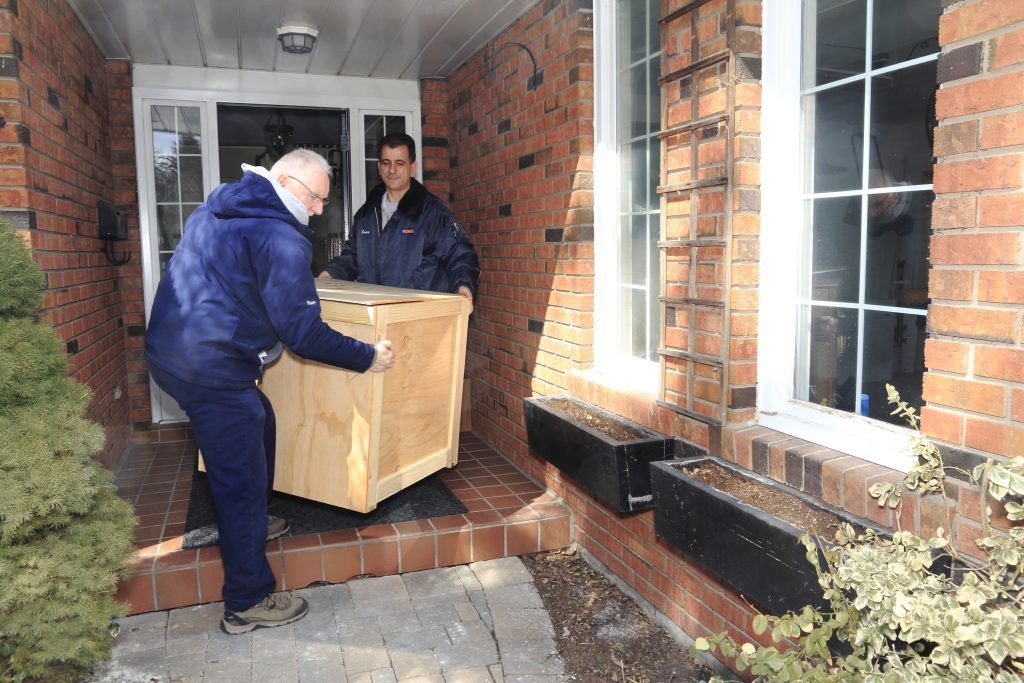
Professional packing can help when time is limited or when belongings need consistent protection. Custom crating is suited to highly valued items and glass that may be damaged during moving, while vehicle transport should be discussed separately from household goods. Describe unusual items early so the estimate includes the right materials and handling.
Compare direct delivery with storage and staged delivery
Direct delivery is simplest when your Toronto home is ready and your dates line up. Storage or staged delivery may make more sense when a lease begins later, renovations are unfinished, or family members arrive at different times. Ask about warehouse conditions, access, charges, and how delivery instructions are recorded.
Understand pickup and delivery timing across the border
A cross-border shipment has more moving parts than a domestic trip: loading, transportation, documentation, inspection possibilities, and final delivery coordination. Exact dates may be affected by border or roadway conditions, so plan with a buffer rather than scheduling a critical appointment immediately after arrival. Keep your mover informed when either address or date changes.
Work with a mover that serves Canada-to-US and US-to-Canada residential routes
Choose a company that can explain the residential process in both directions and has a clear service area for your route. Taylor provides cross-border planning help, customs-aware coordination, and communication from estimate through delivery for Canada–US moves. Ask who will coordinate the shipment and how updates will be shared.
Plan the move from New York to Toronto step by step
A written timeline turns a complicated relocation into a sequence of manageable decisions. Start with immigration and housing, then work backward from the intended departure date to booking, decluttering, packing, and building coordination. Leave some breathing room because international transportation rarely rewards a schedule with no margin.
Set a timeline for booking, decluttering, and packing
Begin several months ahead when possible, especially if your move depends on a permit, a property closing, school timing, or a narrow work start date. Book transportation once your route and approximate volume are clear, then declutter before the final inventory. Pack documents, medication, valuables, and daily essentials separately from the shipment.
Coordinate building access, elevators, parking, and delivery conditions
Contact both buildings about elevator reservations, loading zones, certificates, parking restrictions, and permitted moving hours. Toronto condominiums may have booking procedures that differ from a New York apartment building. Send the mover accurate details about stairs, doorways, elevators, and long carries before the estimate is finalized.
Prepare for border inspections and transportation delays
Keep your inventory, identity documents, contact information, and shipment references available while travelling. Do not plan a same-day handoff that depends on the truck arriving at an exact hour. Weather, inspections, traffic, and documentation questions can all affect the schedule.
Keep essential documents and first-night items with you
Carry passports, permits, prescriptions, chargers, basic clothing, toiletries, children’s needs, and a few kitchen or bedding essentials. A small personal kit makes a delayed delivery far less disruptive. Save the mover’s contact details in your phone and keep a printed copy as backup.
Get settled in Toronto and the Greater Toronto Area
Toronto is only one part of the region you may consider. Your choice of neighbourhood or nearby GTA community affects commute, housing, transit, schools, services, and the practical cost of daily life. Visit where possible, compare the whole routine, and avoid choosing based on rent or purchase price alone.
Compare Toronto neighbourhoods with nearby GTA communities
Downtown, midtown, North York, Scarborough, and the west or east ends offer different housing and commuting patterns. Nearby communities such as Mississauga, Oakville, Burlington, Milton, Brampton, and Hamilton may provide another balance of space, access, and lifestyle. Think about where you need to travel every week, not only what looks appealing on a map.
Arrange housing, utilities, banking, and communications
Secure a realistic address and possession date before confirming final delivery details. Then arrange utilities, internet, mobile service, banking, insurance, and mail forwarding in an order that matches your arrival. Keep US financial and tax records accessible while establishing your Canadian accounts and services.
Learn how Toronto transit and car ownership differ from New York
Toronto’s transit network, GO Transit, highways, and local services work differently from New York’s subway and regional systems. If you plan to drive, research registration, insurance, parking, winter conditions, and commuting costs before importing or replacing a vehicle. A neighbourhood with a shorter map distance may not produce the easiest daily trip.
Prepare for Ontario healthcare, schools, and everyday services
Research healthcare eligibility and enrollment requirements before arrival, particularly if there may be a waiting period or documentation requirement. Families should also review school boundaries, registration documents, childcare, and language or support services. Make a first-month list for essentials rather than trying to solve every local task on moving day.
Reduce risk when selecting a cross-border mover
A reliable mover should make the unfamiliar parts of the route more understandable. Compare written estimates, service descriptions, insurance information, and communication practices—not just a headline price. The cross-border moving checklist can help you review timing, household inventory, and Ontario settlement tasks in one place.
Verify insurance, licensing, estimates, and contract details
Ask what protection applies to professionally packed and owner-packed items, how valuation is calculated, and which exclusions appear in the contract. Confirm the pickup and delivery addresses, estimated weight, services, payment terms, cancellation rules, and conditions that can change the price. Keep every revision in writing.
Ask how the mover handles customs coordination and documentation
Find out who collects the inventory, who reviews it for transport concerns, and how questions are escalated before the border crossing. A mover may coordinate customs-related logistics, but you remain responsible for providing truthful personal information and declarations. Clear ownership of each document reduces last-minute confusion.
Check policies for claims, delays, storage, and fragile items
Before signing, ask how to report damage, when a claim must be submitted, and what happens if delivery is delayed or storage becomes necessary. Confirm whether fragile goods, artwork, glass, vehicles, and specialty items require separate services. These details matter most when the move does not follow the ideal schedule.
Request a detailed quote and a dedicated move coordinator
A detailed quote should connect your inventory to the proposed services and identify assumptions about access, packing, storage, and delivery. Taylor offers a designated move coordinator for its moves, and its coordinator team helps clients with move issues and customs services. Ask for one clear contact who can explain the next step from estimate through delivery.
Plan Your Toronto Move
If your route, inventory, or dates are becoming difficult to coordinate, speak with a cross-border moving consultant about the household move. Request a quote based on your actual belongings and services so you can make a decision with clearer information.
Conclusion
Moving from New York to Toronto is easier to manage when immigration, customs, budgeting, transportation, and settlement are planned as connected but distinct tasks. Start early, document what you are bringing, allow room for border-related uncertainty, and choose a residential mover that communicates clearly throughout the route.
Frequently Asked Questions
How far in advance should I plan a move from New York to Toronto?
Begin as early as possible, with several months being a sensible target when immigration, housing, school, or employment dates are involved. Earlier planning gives you time to prepare documents, reduce belongings, compare estimates, and handle building requirements.
Do I need Canadian immigration approval before moving my household goods?
Your entry and residency circumstances should be confirmed before you finalize the move. The specific documents and permissions depend on your situation, so check current Canadian requirements and obtain professional advice where needed.
How are New York-to-Toronto moving costs calculated?
Cross-border estimates commonly consider shipment weight and mileage, along with packing, crating, access, storage, vehicle transport, and delivery requirements. Ask for a written explanation of what is included and what could change the price.
What household items should not go on the moving truck?
Common examples include perishable food, fuel, paint, ammunition, liquids, batteries, propane tanks, aerosol cans, matches, and oil. Ask about any uncertain item before packing it, since some goods may be restricted or require separate arrangements.
Can my car and pets travel with my household shipment?
Vehicles and pets generally require separate planning, documents, and admissibility checks. Confirm import, registration, health, and transportation requirements with the relevant authorities and service providers before setting pickup dates.
What should I keep with me during the move?
Carry passports, permits, prescriptions, financial and housing records, chargers, a few clothes, toiletries, and first-night necessities. Do not place essential documents or medication inside the shipment.
What should I ask a cross-border mover before signing?
Ask about the written estimate, insurance, inventory process, customs coordination, prohibited items, storage, claims, delays, fragile goods, payment terms, and your main move contact. The answers should be specific enough for you to understand who does what and when.
Leave a Comment