Cross border moving company Toronto guide: Moving from Canada to the US

Key Takeaways
A Canada-to-US household move involves more than loading a truck and driving south. Customs preparation, accurate shipment details, and clear coordination all matter.
- Start planning several weeks before the preferred pickup date.
- Confirm immigration documents and shipment requirements early.
- Choose a mover with Canada–US residential experience.
- Compare quotes by weight, mileage, access, and included services.
- Keep communication open from pickup through delivery.
Understand what cross-border moving involves
Moving from Canada to the United States combines residential transportation with customs and entry-status considerations. The route may begin in Toronto, but the planning affects every stage of the shipment. A useful cross-border planning guide can help frame the work before you request estimates.
How a Canada-to-US household move differs from a domestic move
A domestic move generally focuses on packing, transportation, access, and delivery. A Canada-to-US move adds border documentation, an inventory of household goods, and coordination around the shipment’s entry into the United States. That makes careful preparation just as relevant as truck capacity or driving distance.
Why customs planning matters as much as transportation
A shipment can be packed correctly and still face trouble if its documents are incomplete or its contents are unclear. Customs review depends on accurate information about the household goods, the person moving, and the purpose of the shipment. Treat customs planning as part of the move itself, not as a final administrative task.
When to start preparing for your move
The source guidance recommends scheduling at least three weeks ahead when possible, although moves may be booked anywhere from three days to one year in advance. Earlier planning gives you time to sort belongings, confirm your status documents, review restricted items, and arrange access at both addresses. A longer lead time is especially useful when housing, work, or immigration dates are still developing.
Choosing the right service level for your household
Some households want help with the entire move, while others prefer to pack selected items themselves. Discuss packing, crating, storage, vehicle movement, and delivery access before choosing a service level. The right plan should match the value and fragility of your belongings as well as the amount of work you can realistically manage.
Choose a cross border moving company in Toronto
The best cross border moving company Toronto households can choose is not necessarily the one with the shortest estimate. Look for experience with residential shipments leaving Canada, a clear explanation of the process, and a quote that reflects your actual inventory. The company should also be able to explain which parts it handles and which documents remain your responsibility.

A useful comparison starts with the questions below rather than with price alone.
Verify experience with Canada–US residential moves
Ask how the mover handles household shipments from Canada to the United States, including inventory preparation, border coordination, and delivery scheduling. Experience with local Canadian pickup is helpful, but it does not automatically demonstrate cross-border capability. Request a written explanation of the proposed process so you can compare like with like.
Confirm the company’s service area and destination coverage
Your pickup may be in Toronto, Mississauga, or another Canadian community, while delivery could be anywhere in the United States. Confirm that the proposed service covers both addresses and ask whether another carrier or service partner will be involved. For a broader view of Canada-to-USA planning, review these cross-border moving services as background while comparing your options.
Evaluate communication, coordination, and mover training
A designated point of contact can make it easier to manage questions about documents, dates, access, and changes. Ask how updates are shared and who will communicate if the shipment schedule changes. You can also ask about packing and moving training without assuming that a technology claim or service promise applies unless it is explained in writing.
Check insurance, storage, packing, and specialty services
Review the protection available for professionally packed and owner-packed items, then ask about storage and specialty handling. Taylor Moving offers professional packers, move coordinators, car moving services, custom crating, and a fully insured climate-controlled storage warehouse. The relevant services should appear in your estimate rather than being left as informal assumptions.
Prepare the documents and shipment details
Documentation gives the mover and border authorities a shared description of who is moving and what is being shipped. Begin collecting documents while you are still deciding what to take. If your route or status is unusual, ask for guidance early and verify requirements with the relevant government authority.
Personal identification and immigration documents
Keep passports, identification, visas, work permits, and other immigration papers accessible rather than inside the shipment. The details on these documents should align with the names and addresses used for the moving paperwork. Make copies or secure digital records for your own files, while following appropriate privacy practices.
Inventory requirements for household goods
A household inventory should describe the goods clearly enough for review at the border. Include quantities, useful descriptions, and special details for valuable, fragile, or unusual belongings. Avoid vague entries such as “miscellaneous boxes,” because they make the shipment harder to understand and verify.
Active visas and entry-status considerations
An active visa or another form of entry status can affect how your household goods are documented. Your moving company may help coordinate information, but immigration eligibility is a separate matter and should be confirmed with the appropriate authority. Keep the status documents current and tell the mover if your timing or status changes.
Information to provide before receiving a quote
A reliable estimate depends on more than the number of bedrooms. Share the origin and destination addresses, preferred dates, access conditions, approximate inventory, packing needs, storage requirements, and any large or delicate items. If your move involves a piano, vehicle, custom crate, or difficult stairs, mention it before the estimate is prepared.
Understand customs requirements for household goods
Household goods crossing from Canada into the United States need an accurate declaration and supporting information. Requirements can vary with the traveler’s circumstances and the items included. This is one reason a mover’s customs-aware coordination should be discussed before pickup, not after the truck is loaded.
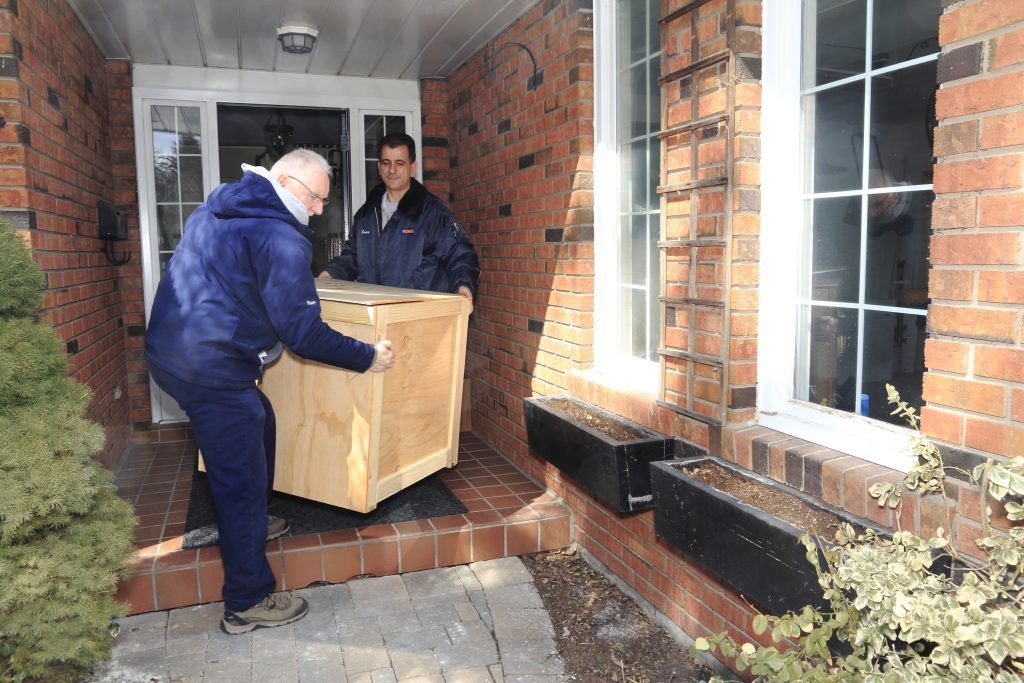
The customs and inventory guidance available for Canada–US relocation is useful as a starting point, but individual circumstances still need careful review.
Items that commonly require advance review
Vehicles, alcohol, firearms, plants, food, high-value goods, and certain regulated materials may require additional attention or may not be suitable for a household shipment. Pets also need separate planning and should not be treated as ordinary moving inventory. Ask about anything that could involve a permit, declaration, inspection, or special transport rule.
Prohibited and restricted items to leave behind
Do not pack items that are unsafe or commonly excluded from moving trucks. The supplied moving guidance identifies the following examples:
- Perishable foods and liquids
- Fuel, oil, paint, and propane tanks
- Ammunition, matches, and aerosol cans
- Batteries and gas cans unless properly purged
- Pets and other living items
These items may create safety, customs, or transport problems. Set them aside well before packing day and make separate arrangements where appropriate.
How incomplete paperwork can delay delivery
Missing signatures, inconsistent names, unclear inventories, or absent status documents can lead to questions at the border. A delay may then affect the planned delivery window, elevator booking, or temporary accommodation. Keeping one organized document file and responding promptly to requests can reduce avoidable back-and-forth.
Preparing an accurate packing and inventory list
Create the inventory as belongings are packed, not from memory after the truck leaves. Record the contents of each carton and identify items that are new, used, fragile, or unusually valuable. After the list is prepared, review it against the actual shipment so the documents and boxes tell the same story.
Compare cross-border moving quotes
Cross-border estimates vary because shipments differ in size, route, access, packing, and timing. A low number may omit services that you later need. Ask each mover to explain the assumptions behind the price and the circumstances that could change it.
How weight, mileage, access, and services affect price
For long-distance and cross-border moves, the supplied cost guidance says pricing is based on mileage traveled and shipment weight. Stairs, long carries, parking restrictions, elevators, packing, crating, storage, and specialty items may also affect the work involved. The best comparison uses the same inventory and service assumptions for every estimate.
What should be included in a detailed estimate
Look for the origin and destination, estimated weight, mileage basis, packing scope, access notes, storage terms, protection options, and expected delivery approach. The estimate should identify what is included and what is excluded. If a separate partner, customs service, or third-party charge may apply, ask for that information in writing.
The difference between the cheapest quote and best value
The cheapest quote can be attractive, especially when moving costs compete with housing and travel expenses. But an incomplete scope can shift costs or responsibilities to the customer later. Best value usually means a transparent plan, suitable protection, dependable communication, and a service level that fits the shipment.
Questions to ask about additional charges and delivery
Before signing, ask how changes to inventory, access, dates, storage, and delivery conditions are handled. Confirm whether delivery is scheduled for a specific date or within a window, and ask what happens if border processing takes longer than expected. You can also read this global supply chain guide for broader context on why regulations and logistics can affect movement across borders.
| Quote detail | Why it matters | What to confirm |
|---|---|---|
| Shipment weight | Often forms part of the cross-border pricing basis | How and when it is assessed |
| Mileage | Reflects the distance between origin and destination | Which addresses and route assumptions apply |
| Access conditions | Affects labor, equipment, and time | Stairs, elevators, parking, and carrying distance |
| Included services | Shows what the quoted price actually covers | Packing, crating, storage, and delivery terms |
A detailed estimate makes differences easier to understand. It also gives you a written reference if the inventory, dates, or access conditions change.
Plan the move from pickup through delivery
A cross-border move has several handoffs, even when one company coordinates the overall plan. Packing, loading, transportation, border processing, and destination delivery each depend on the information established earlier. A simple timeline helps you see where decisions are still open.
Packing, wrapping, and protecting your belongings
Professional packers can secure household items, reduce the time you spend preparing, and help make loading more efficient. Fragile or high-value items may need custom crating rather than ordinary cartons. If you pack some belongings yourself, ask how those items are documented and protected under the moving agreement.
Pickup-day access requirements in the Greater Toronto Area
Before pickup, confirm parking, building rules, elevator reservations, loading zones, stairs, narrow entrances, and the distance from the door to the truck. Toronto-area homes and condos can have very different access conditions. Send updated instructions if construction, snow, or building scheduling changes the plan.
Transportation, border crossing, and shipment tracking
The shipment moves through a transportation plan that must account for distance, border procedures, and delivery coordination. Keep your essential documents and personal necessities with you rather than in the moving truck. Ask how progress updates are provided and whom to contact if your travel schedule changes.
A clear communication rhythm is especially helpful when the customer arrives before the household goods do. Confirm the next update rather than relying on an assumed delivery date.
Delivery coordination at your US destination
Although the move begins in Canada, the destination address still needs careful preparation. Confirm parking, building access, elevator bookings, unloading areas, and any local rules before the shipment arrives. Keep a copy of the inventory available so you can check cartons and note exceptions during delivery.
Why Toronto-area households choose Taylor Moving
Taylor Moving is a Canadian moving company serving households that need local, long-distance, and cross-border support. Its cross-border approach is based on planning help, customs-aware coordination, and communication from estimate through delivery. The focus here is Canada-origin residential moving to destinations in the United States, not local moving services in America.
Support from the initial estimate through delivery
Taylor Moving provides moving consultants and a move coordinator team to help clients with issues during the move. The documented service scope includes customs services and coordination for needs such as piano disassembly. That kind of support is most useful when the household has several dates, documents, or service providers to coordinate.
Professional packing and custom crating options
Taylor Moving has a team of highly trained professional packers who secure items and can help reduce the number of boxes. The company also provides custom crating for highly valued items and glass that may be damaged during the moving process. Discuss these options during the estimate so the packing plan reflects the belongings you are actually sending.
Climate-controlled storage when move dates do not align
Taylor Moving operates a fully insured climate-controlled storage warehouse for situations in which pickup and occupancy dates do not match. Storage can be relevant when a Canadian home closes before the US residence is ready. Confirm the expected storage period, access terms, and release plan before placing goods into storage.
Planning help for moves from Canada to destinations across the United States
Taylor Moving offers cross-border moving services from points in Canada to destinations across the United States, with moving consultants working closely with customers to design a plan. The company also describes support with customs, containers, and coordination with airlines where relevant to the move. For households comparing systems and records during relocation planning, a separate CRM migration guide is not about moving services, but it illustrates why organized information matters when details change across a complex process. Likewise, a Hayesville travel guide may be useful only for destination research, not for customs or transportation advice.
Conclusion
Moving from Canada to the United States is easier to manage when transportation, documents, customs, inventory, and delivery are planned together. Start early, describe the shipment accurately, compare complete estimates, and choose support that matches the complexity of your household move. When you are ready to discuss your dates and belongings, request a quote and begin with a clear plan.
Frequently Asked Questions
What documents do I need for a Canada-to-US household move?
You generally need personal identification, relevant immigration or entry-status documents, and accurate shipment information. Requirements depend on your circumstances, so verify the current details with the appropriate authorities and your moving coordinator.
How far in advance should I book a cross-border move?
Planning at least three weeks ahead is recommended when possible, although moves may be booked much earlier or, depending on availability, only a few days ahead. Earlier preparation leaves more time for documents, inventory, packing, and scheduling.
What items should not be packed on the moving truck?
Common exclusions include perishable foods, fuel, paint, ammunition, liquids, batteries, propane tanks, aerosol cans, matches, oil, pets, and some gas cans. Ask for a current prohibited-items list before packing.
Can I pack my own household goods?
You can discuss owner-packed items with the mover, but ask how they are documented and protected under the agreement. Professional packing may be preferable for fragile, valuable, or difficult-to-protect belongings.
How are cross-border moving costs calculated?
Long-distance and cross-border pricing is based on mileage traveled and shipment weight in the supplied cost guidance. Access, packing, crating, storage, specialty items, and other services can also affect the estimate.
What happens if customs paperwork is incomplete?
Incomplete or inconsistent paperwork can lead to questions and delay the shipment. Keep documents organized, prepare a clear inventory, and respond promptly if additional information is requested.
How should I prepare for delivery in the United States?
Confirm parking, building access, elevator reservations, unloading space, and contact details before the shipment arrives. Keep your inventory and essential personal documents accessible so delivery can be checked carefully.
Leave a Comment